Closure of psychiatric hospitals and community capacity: Implications for mental health service delivery in England
An Independent clinical evaluation of the transition from institutional psychiatric care to modern community-based systems and the gaps that remain.
Read the full clinical analysis
Samuel Taylor
Independent Mental Health Researcher
Former RNMS RMN I Pharmaceutical CNS Leadership UK
.
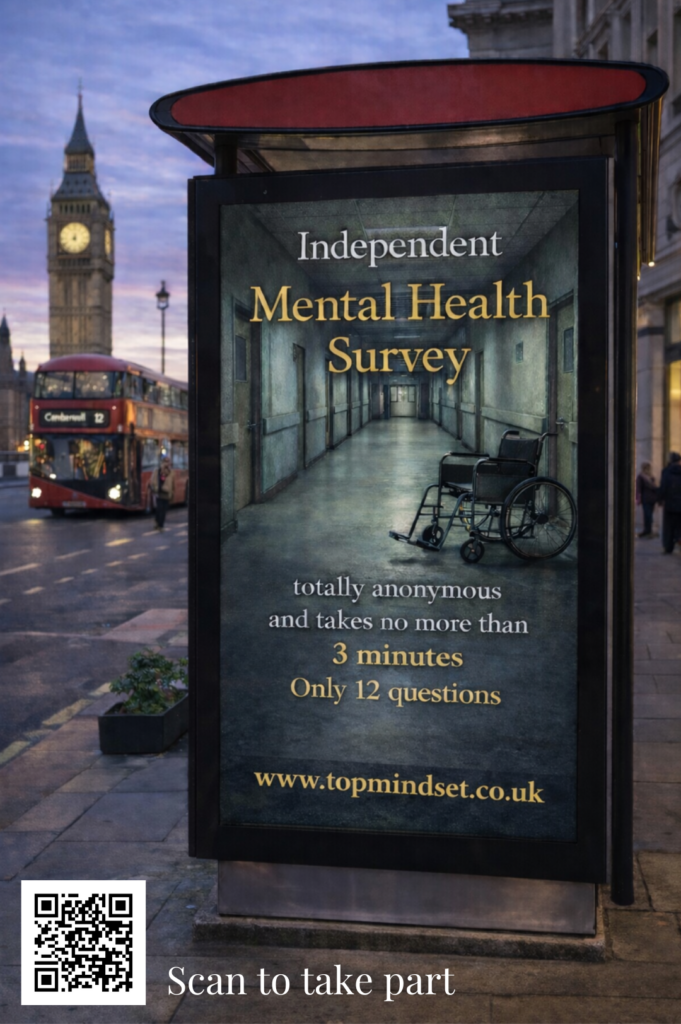
Mental Health Care Survey
🔹 Intro
This survey gathers perspectives on how mental health services are functioning in practice.
It forms part of an independent evaluation of the transition from institutional care to modern community-based systems. Care in the UK.
Responses are anonymous and will be used to better understand system pressures, outcomes, and future needs.
Findings may inform ongoing work examining mental health service provision, including a forthcoming publication and academic submission.
Estimated time: 2–3 minutes.
Takes less than 3 minutes. Anonymous
Inside the Asylum
This article explores the realities of institutional psychiatric care from a clinical perspective, examining both the strengths and limitations of the system and the transition toward community-based care.
Life within institutional psychiatric settings was historically highly structured, shaped by clinical routines, multidisciplinary care, and an emphasis on safety. While earlier systems could be restrictive, psychiatric hospitals evolved to balance containment with therapeutic intervention. With the shift toward community-based care, many of these institutions have now disappeared, though questions around autonomy, dignity, and continuity of care remain
“The legacy of psychiatric institutions is not simply one of confinement, but of evolving care shaped by the knowledge and limitations of its time.”
~Samuel Taylor
Understanding the Term “Asylum”
It is important to recognise that the term “asylum” is often viewed as derogatory in modern discourse, largely due to its association with the Victorian “lunatic asylum.” While the term has since taken on negative connotations, these institutions were, in their time, professional establishments intended to provide care, treatment, and containment for individuals with severe mental illness. Their legacy is therefore more complex than the term alone might suggest.
Closure of psychiatric hospitals and community capacity: Implications for mental health service delivery in England
An Independent clinical evaluation of the transition from institutional psychiatric care to modern community-based systems and the gaps that remain.
Read the full clinical analysis
Samuel Taylor
Independent Mental Health Researcher
Former RNMS RMN I Pharmaceutical CNS Leadership UK
.
Mental Health Care Survey
🔹 Intro
This survey gathers perspectives on how mental health services are functioning in practice.
It forms part of an independent evaluation of the transition from institutional care to modern community-based systems. Care in the UK.
Responses are anonymous and will be used to better understand system pressures, outcomes, and future needs.
Findings may inform ongoing work examining mental health service provision, including a forthcoming publication and academic submission.
Estimated time: 2–3 minutes.
Takes less than 3 minutes. Anonymous
Inside the Asylum
This article explores the realities of institutional psychiatric care from a clinical perspective, examining both the strengths and limitations of the system and the transition toward community-based care.
Life within institutional psychiatric settings was historically highly structured, shaped by clinical routines, multidisciplinary care, and an emphasis on safety. While earlier systems could be restrictive, psychiatric hospitals evolved to balance containment with therapeutic intervention. With the shift toward community-based care, many of these institutions have now disappeared, though questions around autonomy, dignity, and continuity of care remain
“The legacy of psychiatric institutions is not simply one of confinement, but of evolving care shaped by the knowledge and limitations of its time.”
~Samuel Taylor
Understanding the Term “Asylum”
It is important to recognise that the term “asylum” is often viewed as derogatory in modern discourse, largely due to its association with the Victorian “lunatic asylum.” While the term has since taken on negative connotations, these institutions were, in their time, professional establishments intended to provide care, treatment, and containment for individuals with severe mental illness. Their legacy is therefore more complex than the term alone might suggest.
Closure of psychiatric hospitals and community capacity: Implications for mental health service delivery in England
An Independent clinical evaluation of the transition from institutional psychiatric care to modern community-based systems and the gaps that remain.
Read the full clinical analysis
Samuel Taylor
Independent Mental Health Researcher
Former RNMS RMN I Pharmaceutical CNS Leadership UK
.
Mental Health Care Survey
🔹 Intro
This survey gathers perspectives on how mental health services are functioning in practice.
It forms part of an independent evaluation of the transition from institutional care to modern community-based systems. Care in the UK.
Responses are anonymous and will be used to better understand system pressures, outcomes, and future needs.
Findings may inform ongoing work examining mental health service provision, including a forthcoming publication and academic submission.
Estimated time: 2–3 minutes.
Takes less than 3 minutes. Anonymous
Inside the Asylum
This article explores the realities of institutional psychiatric care from a clinical perspective, examining both the strengths and limitations of the system and the transition toward community-based care.
Life within institutional psychiatric settings was historically highly structured, shaped by clinical routines, multidisciplinary care, and an emphasis on safety. While earlier systems could be restrictive, psychiatric hospitals evolved to balance containment with therapeutic intervention. With the shift toward community-based care, many of these institutions have now disappeared, though questions around autonomy, dignity, and continuity of care remain
“The legacy of psychiatric institutions is not simply one of confinement, but of evolving care shaped by the knowledge and limitations of its time.”
~Samuel Taylor
Understanding the Term “Asylum”
It is important to recognise that the term “asylum” is often viewed as derogatory in modern discourse, largely due to its association with the Victorian “lunatic asylum.” While the term has since taken on negative connotations, these institutions were, in their time, professional establishments intended to provide care, treatment, and containment for individuals with severe mental illness. Their legacy is therefore more complex than the term alone might suggest.